3…Bc5
+0.49, the engine’s eval after 3…Bc5. The seam rests there.
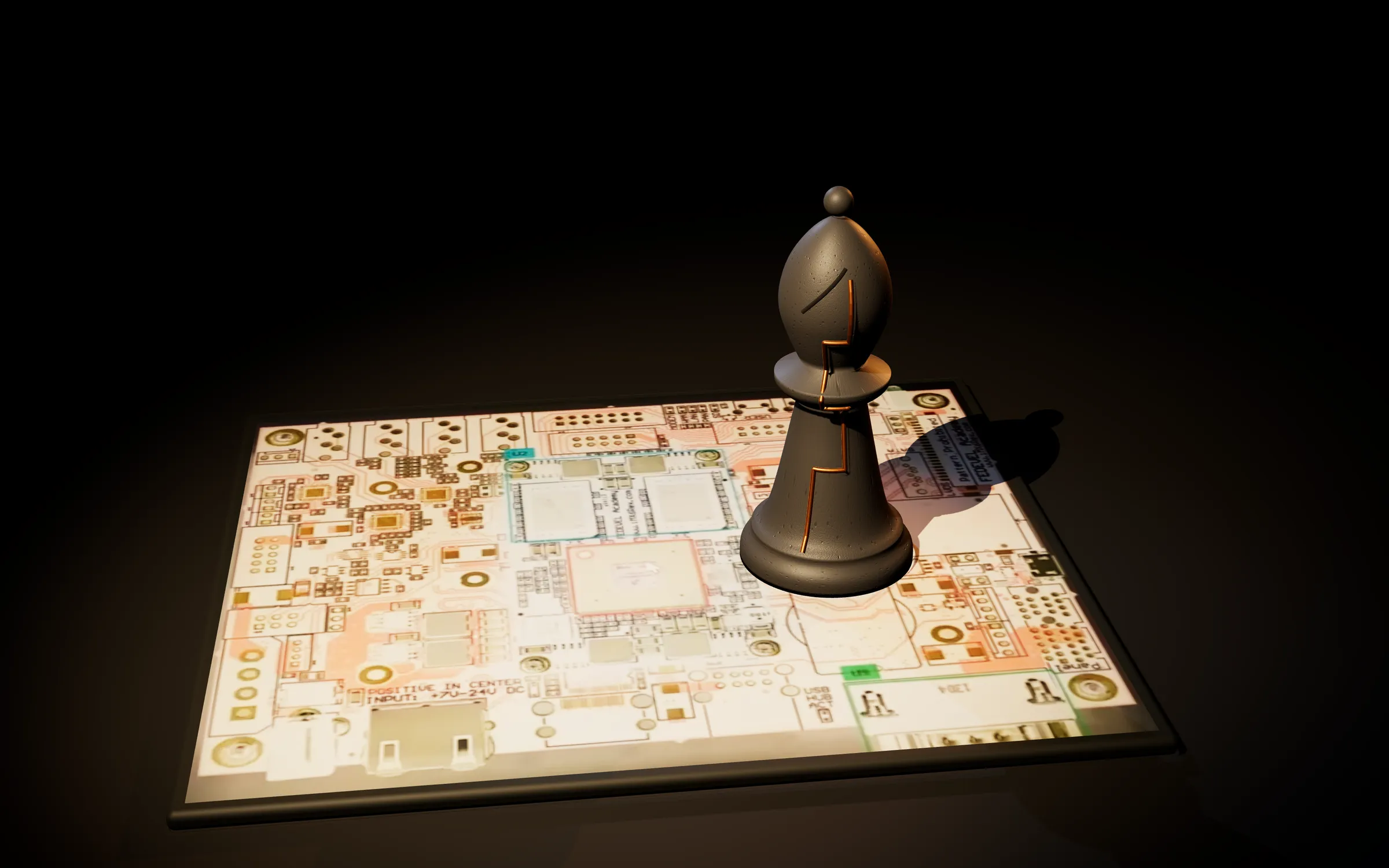
Result and evidence
- Vision and voice PCB inspectionCapabilityCached for network loss; detection quality was not measured.
The case
- Problem
- An operator inspecting a board needs to see the copper fault and hear inspection guidance, including when the network drops. A detector that fails with connectivity loss is not dependable enough for the inspection floor.
- Decision
- Vision on the board and voice for the operator; results are cached locally so the floor can keep working when the network drops.
- Constraint
- The inspection has to survive a dropped network.
- Example
- Input: a board image and operator audio. Output: a fault overlay on the copper, with inspection guidance still audible when the network drops.
- Considered and rejected
- A server-only detector, rejected because it would fail when connectivity drops.
Architecture, on ECS Fargate
- Next.jsUI
- ExpressAPI
Beside the path
- Bedrock Novavision and voice
- OpenSearchindex
Around it
- GitHub ActionsCI/CD to ECR
What was built
- A multi-modal GenAI pipeline: Nova Pro handles vision-based fault detection, and Nova Sonic provides low-latency, two-way voice guidance for the technician.
- A decoupled Next.js frontend with an Express REST API.
- GitHub Actions builds and pushes Docker images to ECR and updates ECS Fargate on every push. An Application Load Balancer and Auto Scaling keep it available and cost-efficient.
- A local cache that holds the inspection when the network drops.
- Limitations
- Detection quality (precision, latency, confusion) was never measured.
- What I would change now
- Measure precision, latency and confusion.
The product
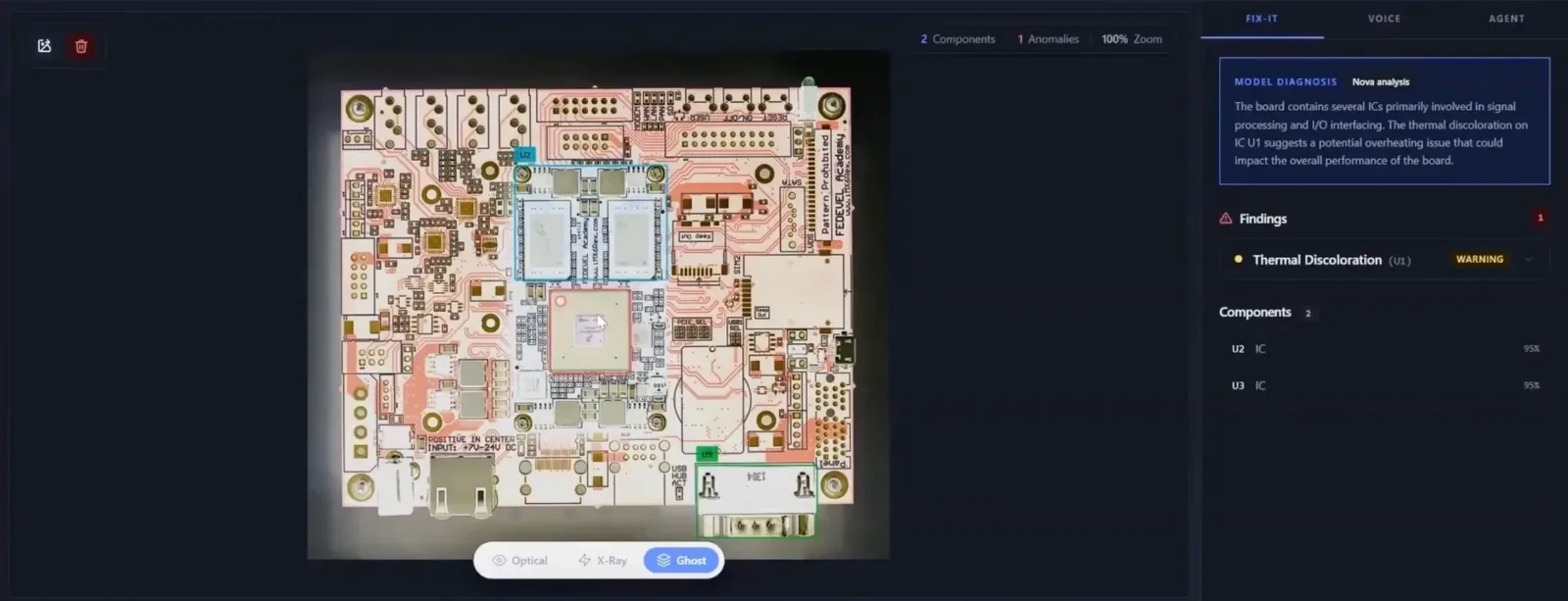
Next.js · Amazon Bedrock · Express · OpenSearch Serverless · GitHub Actions · ECS Fargate
Next, 10…Bg4FaultLine